
Hunt County Arrest Warrants Explained
An arrest warrant lets a peace officer take a named person into custody. Texas law demands a sworn complaint or affidavit plus probable cause. A magistrate or judge reviews that showing, and the Sheriff who serves the order does not build a public warrant list from it. Where does a Hunt County case land? A felony cause runs through the District Clerk and either the 196th or 354th District Court. A County Court at Law misdemeanor goes through the County Clerk instead. JP and municipal courts run their own lower-level process. For court names and contact routes, the county's official District Courts page covers both district benches.
View the Hunt County District Courts information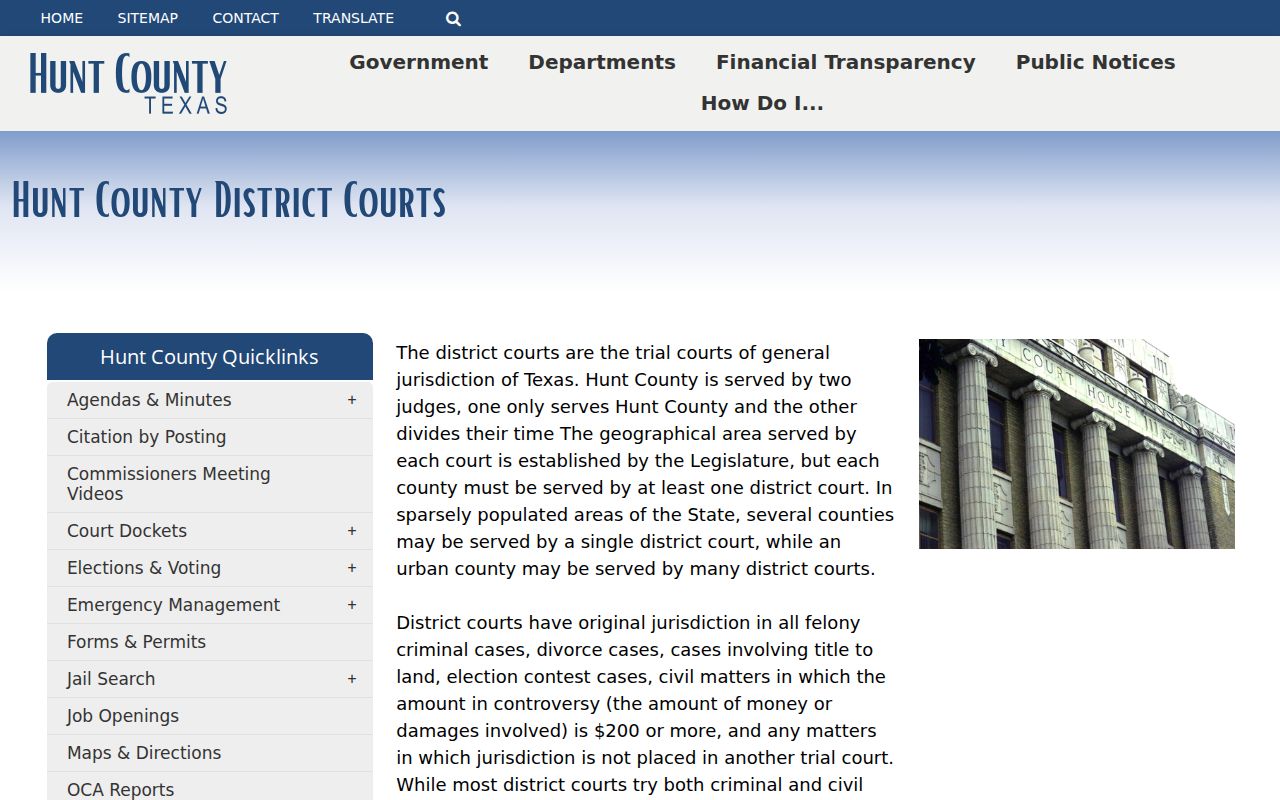
Use the listed court office to route a district-level case record request.
Hunt County Probable Cause Review
Article 15.03 of the Texas Code of Criminal Procedure sets out when a magistrate may issue a warrant or a summons after a complaint. The document names the accused and the offense. It then directs an authorized peace officer to execute it. Bond and the next court event stay with the issuing court. A felony and a misdemeanor file can pass through different clerk offices even though the same Sheriff serves both. In Hunt County, ask which court signed the order and which record number the clerk tracks before asking for a copy.
Inside a Hunt County Arrest Warrant
Hunt County offices publish no standard local warrant-number format. The fields below come from state law and court forms, not a real person's record. Access can change once a warrant is executed, and a clerk may redact protected details.
| Warrant number | LOCAL FORMAT NOT PUBLISHED |
|---|---|
| Cause number | The related criminal case or citation reference. |
| Named person | Identifying information may be limited or redacted. |
| Charge | The stated offense or statutory classification. |
| Issuing authority | Judge or magistrate and the court holding the case. |
| Issue and return | Issue date and service or return date, if public. |
| Bond | Amount or type if set and released in the record. |
Hunt County Arrest Warrant Access
Texas Code of Criminal Procedure Article 15.26 opens an arrest warrant and its supporting affidavit to the public once the warrant is executed, subject to other law. That does not open every active investigative file. Put any written request in specific terms: name the existing record and the office you believe holds it. For a district-court filing, the District Clerk's records request is the route. The County Clerk handles misdemeanor judicial records under its own inspection and copy rules. Neither office will run a fresh search across every Hunt County court for you.
Serving Arrest Warrants in Hunt County
The Hunt County Patrol Division lists four patrol districts and states plainly that deputies serve outstanding warrants. Four elected constables and city police departments serve papers too. State law allows any authorized peace officer to execute a warrant. The county's pages do not publish which officer holds a given case, a service schedule, or a safe surrender window. For routing on a county case, call the Sheriff's main office or the jail information line first, then confirm details with the issuing court. A city citation belongs with that municipal court. After an arrest, booking and magistration follow the court's process, and posting bond does not dismiss the underlying charge.
Hunt County Sheriff Service Role
The Sheriff and the constables serve court process, but no active countywide roster appears on their public pages. Hunt County lists four precinct constables without saying which officer holds a particular warrant. So ask the issuing court or the Sheriff for routing instead of guessing from a precinct map. Service status and case status are related but distinct. A returned warrant can leave a case still pending. A bond may secure release without ending the prosecution.
Comparing Arrest, Summons, and Bench Warrants
An arrest warrant authorizes custody on probable cause. A summons orders a person to appear without an immediate arrest. A bench warrant answers a missed court date, and Hunt County's missed-date process is covered on the Hunt County bench warrant page.
| Feature | Arrest Warrant | Summons | Bench Warrant |
|---|---|---|---|
| What it orders | Arrest under the warrant | Appear at a set date | Custody for a missed obligation |
| Basis | Probable cause | Charge or court action | Failure to appear or comply |
| Who issues it | Magistrate or judge | Court or authorized officer | Judge in the existing case |
| Response | Ask about counsel, bond, or surrender | Appear as directed | Ask the issuing court about recall or hearing |
Hunt County Search Affidavit Limits
A search warrant is not an arrest warrant. One authorizes officers to hunt for evidence; it is not a personal status lookup. Texas Article 18.011 lets a court seal certain felony search-warrant affidavits when statutory conditions are met. A missing affidavit proves nothing about whether an order exists. Ask the Hunt County issuing court which parts of the record are public, then follow its lawful access process.
If There's an Arrest Warrant for You
First, confirm the issuing court and the warrant type. Ask whether a bond is set, whether a magistrate hearing is required, and whether counsel can arrange an appearance. Hunt County offices promise no arrest-free walk-in process. The Sheriff or jail can explain intake routing, while the court alone controls recall and the next setting. The Bail Bond Board regulates licensed bond companies through the County Clerk. Its surety surrender form belongs to the authorized bond process, not to public warrant records. After any action, keep a receipt, release paper, or court order in hand.
Important: Talk with a lawyer before appearing. Confirm the court, bond terms, intake location, accepted payment, and written proof of any recall or release.
Federal Warrant Search in Hunt County
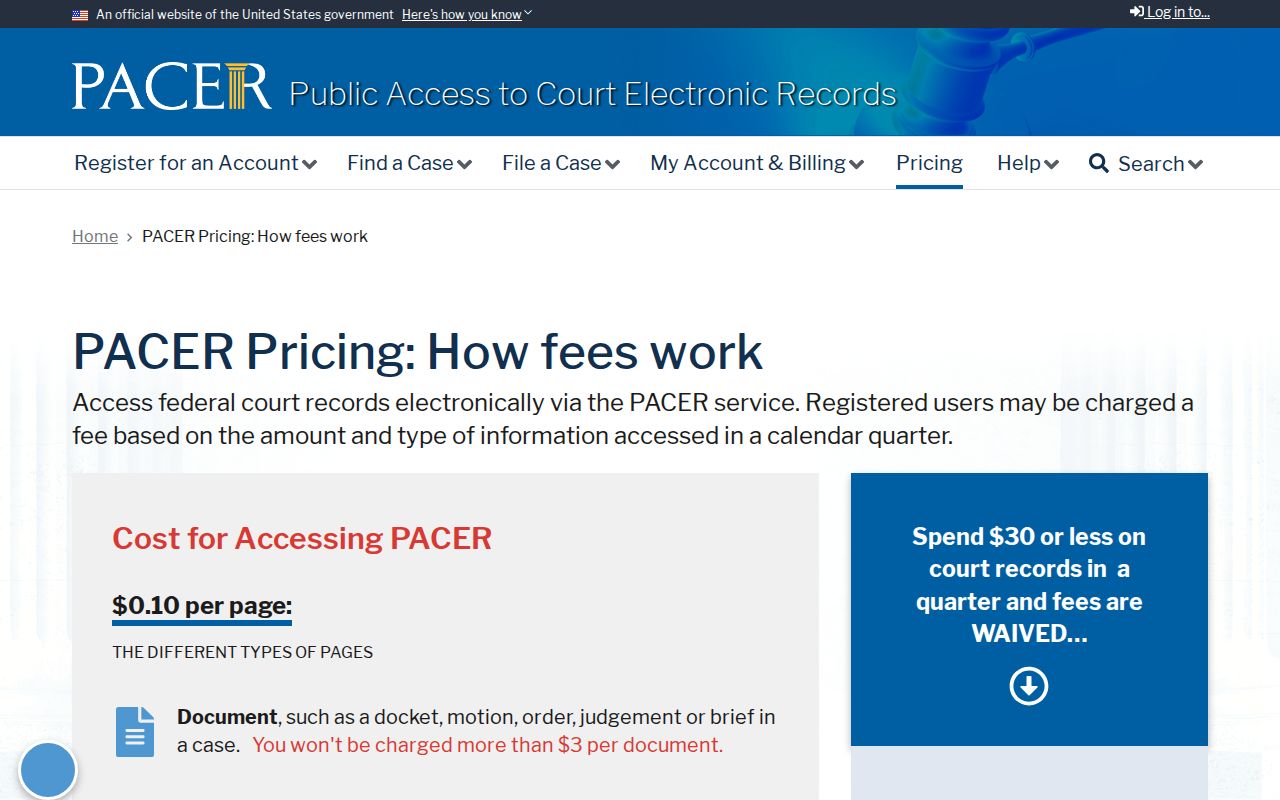
Federal matters in Hunt County run through the Northern District of Texas, Dallas Division, so a JP portal, a city court site, or the Sheriff's warrant list will not reach them. PACER is the docket system for that work. Its published pricing runs about ten cents per page, capped at three dollars per document, and both figures sit under a quarterly threshold that can shift, as can the prices themselves. The official PACER pricing page lays out the current fees in full.
Sealed or active warrant details rarely appear on a Hunt County federal docket; ask the federal clerk or your lawyer about a live case.