
Hunt County's Most Wanted Program
The Hunt County Sheriff’s site does not publish an official county most-wanted roster or fugitive page in the sources reviewed. Hunt County Crime Stoppers is the local public tip program. It gives community members a way to share information about crime, but it is not a searchable list of local warrants.
For statewide featured cases, Texas DPS maintains the Texas 10 Most Wanted program. This page describes and links official channels only. It does not copy names, photographs, mugshots, or individual case details from any roster.
Hunt County Most-Wanted Warrant Program
No official Hunt County roster, reward amount, or recurring “fugitive of the week” cadence was located. Greenville’s active-warrant PDF is a municipal list, not a county most-wanted page. Texas DPS’s curated list is statewide and selects a subset of cases.
Use each source for its real purpose. A public tip program can forward information to law enforcement, while a person checking a court status must contact the issuing court.
How the Most Wanted Lists Work
A curated list selects cases that an agency chooses to feature; it is not the full set of active warrants. Texas DPS describes a statewide program with selected profiles and reward notices. Hunt County has no public sheriff roster to compare against. The Greenville city list is a separate municipal court product and may lag recent payments.
Note: A public list is a snapshot, not a complete status record. Its absence does not prove there is no warrant, and a listed item should be verified with its issuing agency.
Hunt County Warrant Tip Channels
The local Crime Stoppers page lists three routes: call (903) 457-2929, use its online tip link, or text TIP294 followed by crime information to CRIMES at 274637. The page says the phone line is stand-alone, has no caller ID, and is not recorded. It also says callers remain anonymous and may qualify for a reward, but it does not publish a current amount or payment schedule.
The official local page explains the tip options without posting any warrant roster.
Visit the official Quinlan Crime Stoppers page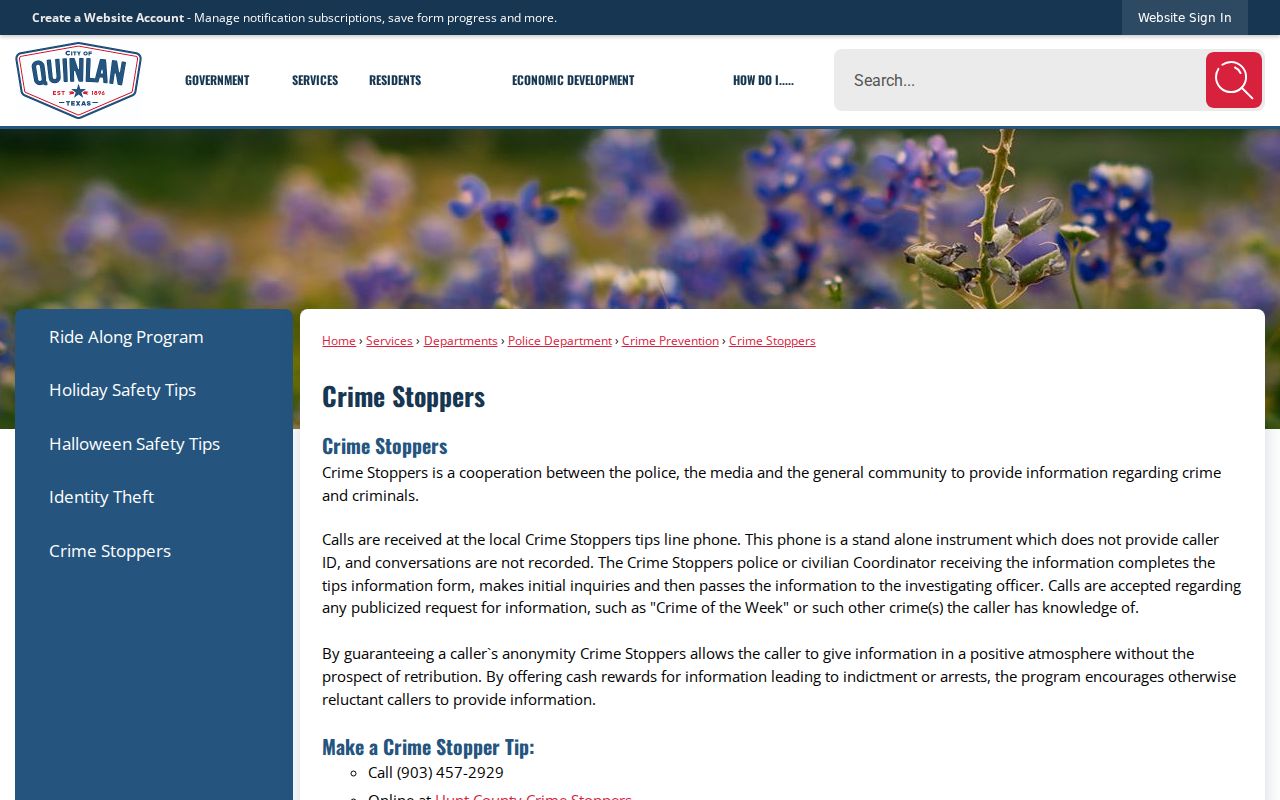
Use the court, not Crime Stoppers, for your own case status.
Reporting a Tip Safely
A tip is information for law enforcement, not an invitation to confront a person or conduct a warrant check. The local page says its phone route is anonymous; the statewide Crime Stoppers directory offers a separate fallback. Do not use a personal social-media message or publish identifying details on this site.
- Choose the official local phone, web, or text route.
- Give relevant details through that channel and keep any tip number supplied.
- Step back and let law enforcement assess the information.
- Ask the program directly about eligibility; no local reward amount is published here.
Key Point: Crime Stoppers tips may be anonymous and may qualify for a reward. Report through the official channel, then leave follow-up to the authorities.
Hunt County Warrant Tip Privacy
The local page describes a stand-alone phone line without caller ID and says calls are not recorded. It also offers web and text routes. The statewide directory says anonymity is protected by law. Each channel is for information about crime, not a way to ask whether a caller has a warrant.
The directory image shows the official state Crime Stoppers routing information; it contains no individual wanted profile.
Open the Texas Crime Stoppers directory
For your own status, contact the court that issued the order.
Most Wanted Lists vs Active Warrants
A featured list and an active warrant record serve different purposes. The first is a curated public-safety program; the second is an order controlled by its issuing court or agency. Hunt County’s public sources show no full county roster, so neither a Crime Stoppers tip page nor the statewide DPS list can answer every local case.
| Feature | Most Wanted List | Active Warrant |
|---|---|---|
| Scope | Selected cases featured by a program | Any order the maintaining court has not cleared |
| Who maintains it | Crime Stoppers or DPS program staff | Issuing court or law-enforcement office |
| What it answers | How to send a public tip | Current status only after official confirmation |
| How to respond | Use the official tip route | Contact counsel and the issuing court |
Hunt County and Statewide Warrant Lists
DPS’s Texas 10 Most Wanted is a statewide selection, not a county search. Its page has program details and curated entries, while the local Crime Stoppers page routes tips. Neither provides a complete Hunt County active-warrant count or a public search for every city and court.
The DPS program image shows its public interface rather than a person’s profile. Follow the link for current statewide program details; do not copy a named roster into a local page.
View the DPS Texas 10 Most Wanted program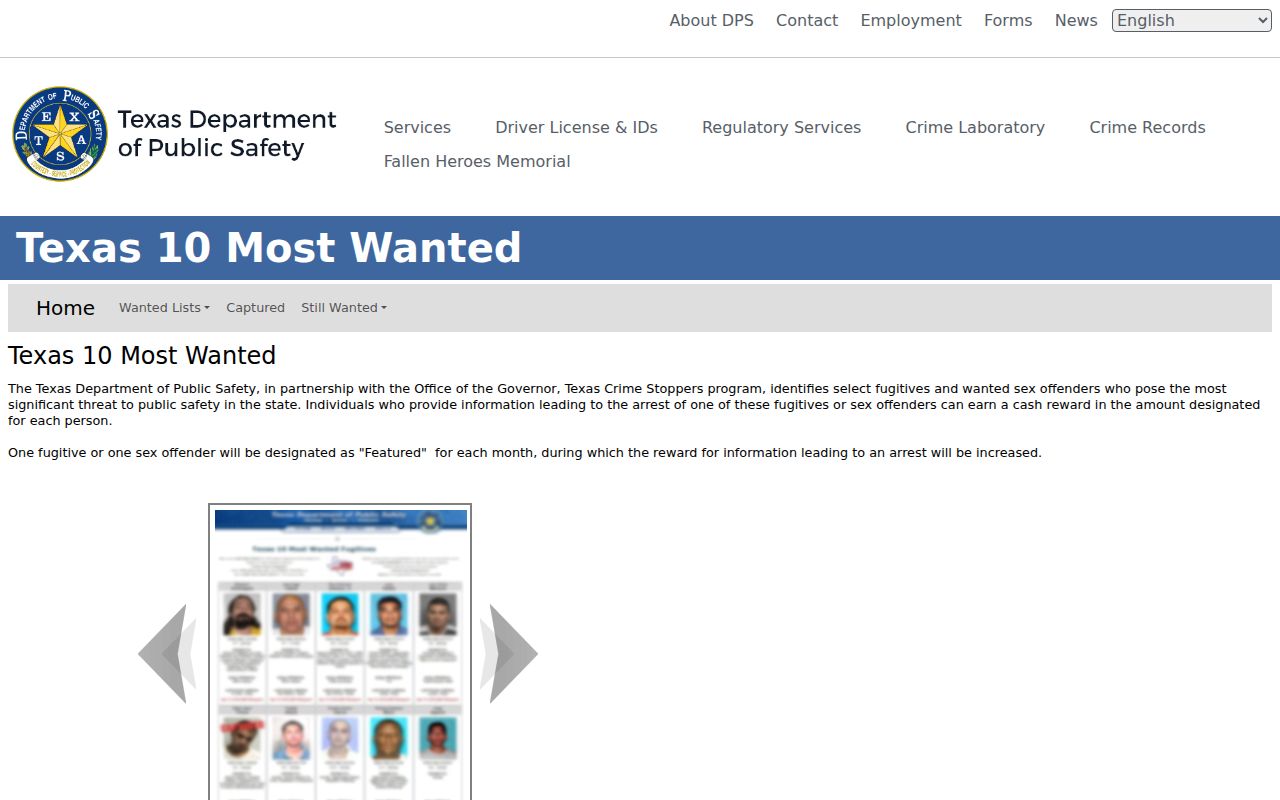
A local warrant question still belongs with the local issuing court.
If You Think You Are on a List
Do not rely on a cropped image, old post, or secondary copy. Contact a lawyer and the agency that published the notice to confirm whether it is current and what court holds the case. If you are checking a local warrant, call the issuing municipal, JP, county, or district court. A tip channel cannot recall an order or set bond.
Important: Ask counsel to verify any listed case and arrange an approved appearance or bond; do not approach a law-enforcement office based on an unconfirmed post.
Hunt County Fugitive Warrant Task Force
The U.S. Marshals Service lists the North Texas Fugitive Task Force as a federal and regional law-enforcement resource. Hunt County is in the Northern District of Texas, Dallas Division. That task force role is distinct from the local Crime Stoppers tip program and does not create a public Hunt County roster.
A federal matter belongs with the federal court or counsel. A municipal or JP matter still belongs with the local court that issued it.